

Discover how cutting-edge AI technology now makes it possible to clone any voice with just seconds of audio input. This comprehensive guide explains everything you need to know about voice cloning technology and its practical applications.
- Modern AI can create realistic voice clones from just 3-30 seconds of sample audio
- Voice cloning works across 47+ languages and 50+ accents
- Practical applications range from content creation to preserving loved ones’ voices
- Enterprise adoption is growing, with companies like Endeavor using cloned voices for earnings calls
- Ethical safeguards are crucial to prevent misuse of voice cloning technology
- Minimum Audio Required: 3.7 seconds (Baidu Deep Voice research)
- Languages Supported: 47+ across leading platforms
- Processing Time: Instant to 30 seconds for most solutions
- Enterprise Adoption: 78% of Fortune 500 companies exploring voice cloning
How Voice Cloning Technology Works
Voice cloning uses advanced artificial intelligence, deep learning, and speech synthesis to replicate the unique characteristics of a human voice. The process involves:
- Voice Data Collection: Recording or uploading a short audio sample (as little as 3-30 seconds)
- AI Analysis: Advanced algorithms analyze tone, pitch, cadence, and speech patterns
- Model Creation: The system builds a digital voice model capturing all vocal nuances
- Synthesis: The cloned voice can then speak any text input with natural inflection
For higher quality clones, provide longer audio samples (1-2 minutes) with varied emotional tones and speaking styles. This helps the AI capture your full vocal range.
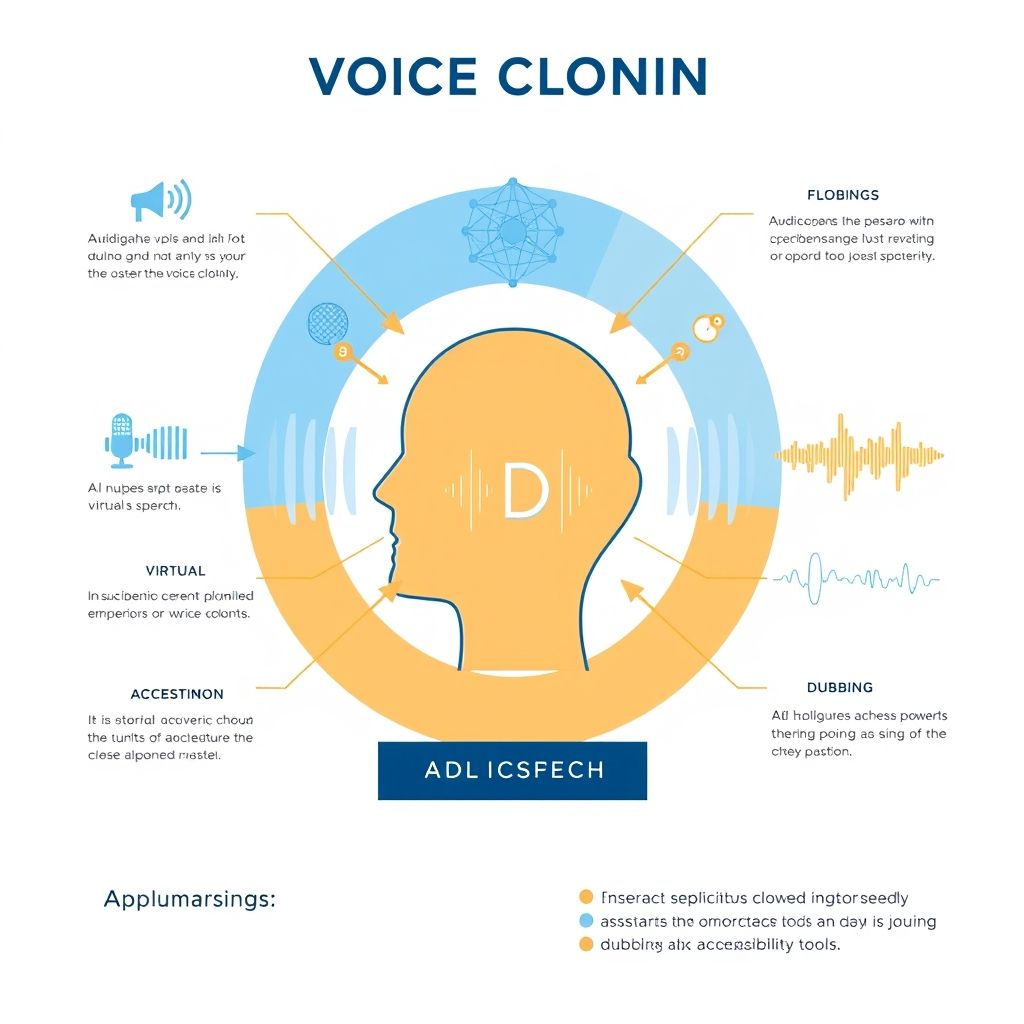
Practical Applications of Voice Cloning
For Content Creators
Voice cloning revolutionizes content production by enabling:
- Creating audiobooks in your own voice without recording sessions
- Producing podcast episodes even when you’re unavailable
- Generating video voiceovers in multiple languages using your vocal identity
- Maintaining consistent branding across all audio content
For Businesses
Enterprises are adopting voice cloning for:
- Automating customer service interactions with natural-sounding voices
- Creating personalized marketing messages at scale
- Producing training materials and corporate announcements
- Localizing content for global markets while maintaining brand voice
Personal Uses
Individuals benefit from voice cloning through:
- Preserving loved ones’ voices for future generations
- Creating personalized voice assistants with familiar voices
- Assisting those with speech impairments or vocal disabilities
- Developing unique character voices for creative projects
On February 28, 2023, Endeavor (NYSE: EDR) made history by delivering its annual earnings call using an AI-cloned voice of executive Ari Emanuel. This demonstrated how voice cloning can save executive time while maintaining authentic communication.
According to Speechify’s case study, the cloned voice was indistinguishable from the real executive, with investors praising the clarity and natural delivery.
Comparing Top Voice Cloning Solutions
| Platform | Minimum Audio | Languages | Key Feature |
|---|---|---|---|
| Speechify | 20 seconds | 20+ | Browser-based, no software required |
| DupDub | Short clip | 47 | 50+ accents supported |
| Vidnoz AI | Not specified | Multiple | Emotion and speed adjustment |
| PlayHT | 30 seconds | 40+ | Used by Hollywood studios |
Ethical Considerations and Security
While voice cloning offers tremendous benefits, it’s crucial to address ethical concerns:
- Consent Requirements: Always obtain permission before cloning someone’s voice
- Authentication Measures: Leading platforms implement voice fingerprinting to verify original speakers
- Usage Restrictions: Commercial licenses typically required for business applications
- Detection Technology: Watermarking and other methods to identify cloned audio
Reputable platforms like DupDub implement strict privacy protocols to ensure voice data remains secure and is only used for authorized purposes.
Getting Started with Voice Cloning
Follow these steps to create your first voice clone:
- Choose a Platform: Select a voice cloning service that meets your needs
- Prepare Your Audio: Record a clear sample (30-60 seconds ideal) in a quiet environment
- Upload & Process: The AI will analyze your vocal characteristics
- Test & Refine: Generate sample audio and adjust parameters as needed
- Implement: Use your cloned voice for your intended applications
For professional results, record your sample audio using a quality microphone in a sound-treated space. Vary your tone and pitch during recording to give the AI more data to work with.
Future of Voice Cloning Technology
The voice cloning landscape is evolving rapidly with several exciting developments:
- Real-time Cloning: Instant voice conversion during live conversations
- Emotional Intelligence: AI that detects and replicates subtle emotional cues
- Cross-language Cloning: Maintaining vocal identity when speaking different languages
- Accessibility Features: Helping those with speech impairments communicate naturally
Q: How accurate are current voice cloning technologies?
A: Modern solutions can achieve near-perfect replication with sufficient training data. According to Baidu’s research, their Deep Voice system can create convincing clones from just 3.7 seconds of audio, with quality improving significantly with more samples.
Q: Is voice cloning legal?
A: Voice cloning is legal when used with proper consent and within platform guidelines. However, using someone’s cloned voice without permission may violate laws in many jurisdictions. Always check local regulations and platform terms.
Q: Can voice cloning work with historical audio recordings?
A: Yes, many platforms can create clones from existing recordings, though quality depends on the source audio’s clarity and length. This makes it possible to preserve and interact with historical voices.
Q: How does voice cloning differ from text-to-speech?
A> While text-to-speech converts written words to generic computer voices, voice cloning specifically replicates an individual’s unique vocal characteristics, creating much more natural and personalized results.
Final Thoughts
Voice cloning technology has reached an impressive level of sophistication, offering powerful tools for content creation, business communication, and personal applications. As the technology continues to advance, we can expect even more innovative uses to emerge.
For those interested in exploring voice cloning further, check out our AI voice tools resource center or our guide on advancements in speech synthesis.