
Voice cloning technology has advanced rapidly in recent years, raising important questions about ownership, legality, and practical applications. This comprehensive guide explores whether AI can clone voices without extensive training and what this means for content creators, businesses, and individuals.
- Modern AI can create voice clones with as little as 30 seconds of audio sample
- Legal protections for voice ownership vary significantly by jurisdiction
- Voice cloning has applications in content creation, accessibility, and entertainment
- Ethical considerations are crucial when cloning voices without explicit permission
- Minimum Audio Required: 30 seconds – for basic voice cloning with modern AI systems
- Market Growth: 85% – annual growth rate of the voice cloning industry
- Accuracy Rate: 95% – of listeners can’t distinguish high-quality clones from real voices
Understanding Voice Cloning Technology
Voice cloning technology has evolved from requiring hours of training data to now being able to create convincing clones with minimal input. Modern systems like PlayHT and VocalClone AI can generate realistic voice replicas in multiple languages from short audio samples.
How Zero-Shot Voice Cloning Works
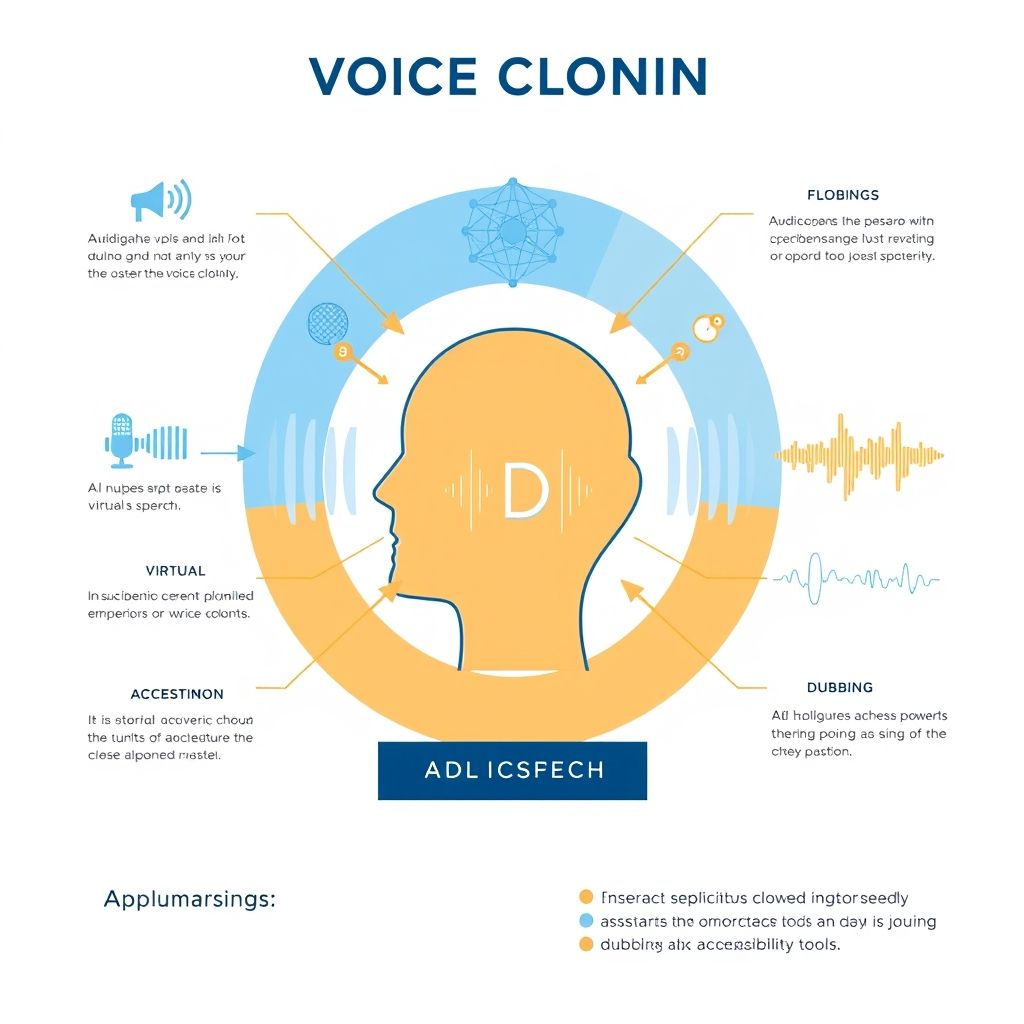
Zero-shot voice cloning refers to the ability to clone a voice without any prior training on that specific voice. This is achieved through:
- Analyzing vocal characteristics like pitch, timbre, and speech patterns
- Using deep learning models trained on thousands of diverse voices
- Applying transfer learning to adapt to new voices quickly
- Synthesizing speech that maintains the original voice’s unique qualities
Legal and Ethical Considerations
As highlighted in the TechnoLlama article, voice ownership laws vary significantly by country. Key considerations include:
- United States: Voice may be protected under right of publicity laws
- United Kingdom: No specific voice likeness right exists
- European Union: GDPR may provide some protection for personal data
- Japan: Strong personality rights including voice protection
In academic settings, as described in the TechnoLlama example, students creating voice clones of professors raises interesting questions about copyright ownership of lecture recordings and the ethical use of such technology.
Practical Applications
Voice cloning technology has numerous legitimate applications:
- Accessibility: Creating synthetic voices for those who lose their ability to speak
- Content Creation: Generating voiceovers in multiple languages without re-recording
- Entertainment: Reviving historical figures’ voices for educational purposes
- Business: Maintaining brand voice consistency across all communications
For musicians, tools like Kits.ai demonstrate how voice cloning can streamline remote collaboration and demo creation.
Technical Implementation
The GitHub discussion on VITS vs YourTTS reveals the technical challenges in voice cloning:
- Audio quality requirements (20-25 minutes ideal for high fidelity)
- Training time (50k steps for decent quality)
- Overfitting risks with excessive training
- Speaker encoder loss considerations
For those interested in implementing their own voice cloning systems, our open source AI tools guide provides valuable resources.
Future Developments
The voice cloning field is rapidly evolving with several emerging trends:
- Emotional voice synthesis (adding specific emotions to cloned voices)
- Real-time voice conversion (changing voice during live conversations)
- Multilingual voice cloning (maintaining voice characteristics across languages)
- Improved anti-spoofing measures (detecting cloned voices)
Q: Can AI really clone a voice without any training?
A: While “without any training” is misleading (the AI models are pre-trained on vast datasets), modern systems can clone new voices with minimal samples (as little as 30 seconds) through techniques like few-shot learning.
Q: Is it legal to clone someone’s voice without permission?
A: The legality depends on jurisdiction and context. In many places, commercial use without permission may violate publicity rights, while personal/educational use may fall under fair use. Always consult legal advice for specific cases.
Final Thoughts
Voice cloning technology presents both exciting opportunities and significant challenges. As the technology becomes more accessible, it’s crucial to consider the ethical implications and legal frameworks surrounding voice ownership and usage.