

Voice cloning technology has advanced dramatically, allowing anyone to create realistic digital replicas of their voice. This comprehensive guide covers everything you need to know about professional voice cloning solutions.
- Create consistent voiceovers for videos, podcasts, and audiobooks
- Generate content in multiple languages using your cloned voice
- Save thousands on professional voiceover services
- Maintain brand consistency across all audio content
- Market Growth: $2.5B – Projected voice cloning market size by 2027 (Source: MarketsandMarkets)
- Adoption Rate: 62% of content creators plan to use voice cloning by 2025
- Quality Improvement: Modern AI voices achieve 4.2/5 MOS (Mean Opinion Score) for realism
Understanding Voice Cloning Technology
Voice cloning uses artificial intelligence to analyze and replicate the unique characteristics of a human voice. Modern systems can capture:
- Vocal tone and timbre
- Speech patterns and cadence
- Emotional inflections
- Accent and pronunciation nuances
For optimal results, most professional voice cloning services recommend providing at least 30 minutes of high-quality audio samples recorded in a quiet environment without background noise.
Instant vs Professional Voice Cloning
There are two primary approaches to voice cloning:
| Feature | Instant Cloning | Professional Cloning |
|---|---|---|
| Audio Required | 1-5 minutes | 30 minutes to 3 hours |
| Processing Time | Immediate | 2-4 hours |
| Quality | Good | Excellent |
| Best For | Quick prototypes | Professional content |
Step-by-Step Voice Cloning Process
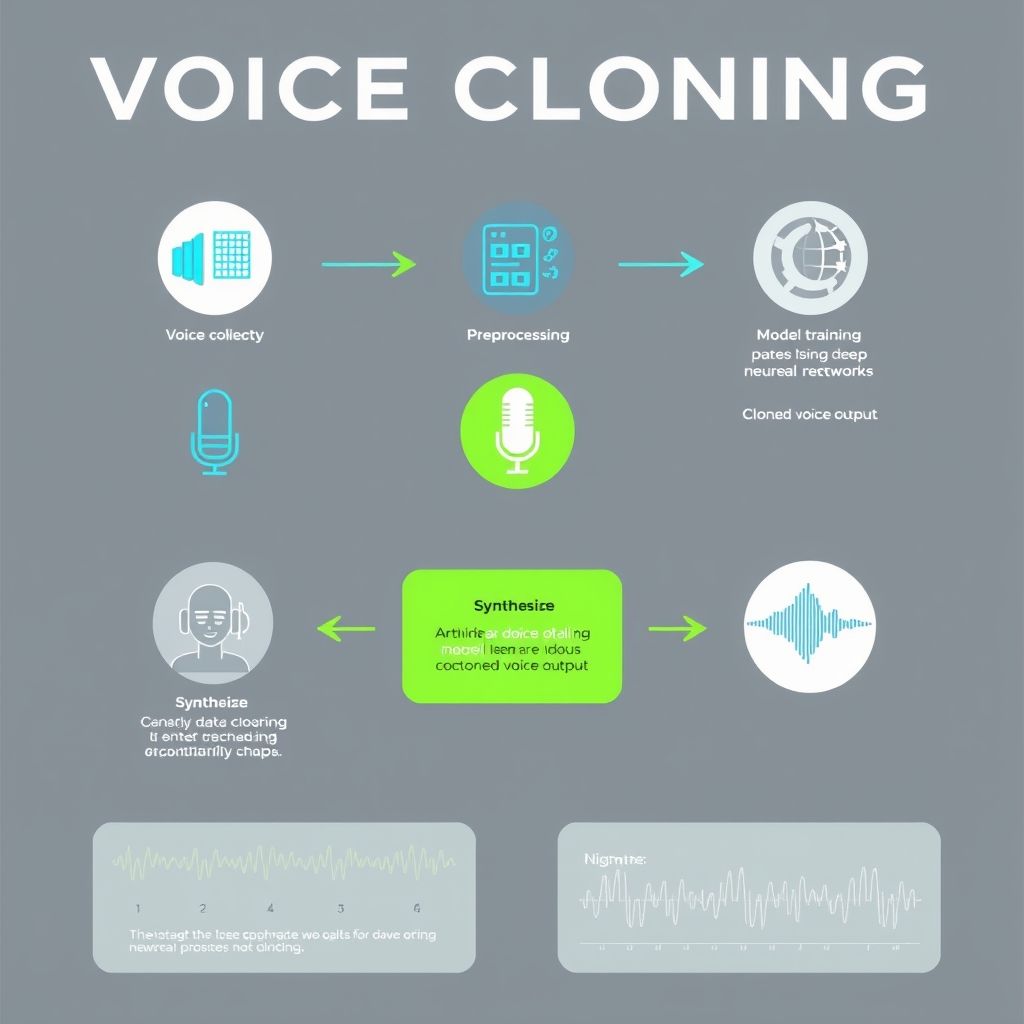
Here’s how professional voice cloning works across leading platforms:
- Audio Collection: Record or upload clean audio samples of the target voice
- Voice Analysis: AI algorithms process the vocal characteristics
- Model Training: The system creates a digital voice model
- Text-to-Speech: Generate new speech by inputting text
- Refinement: Adjust pitch, speed, and emotional tone as needed
Top Use Cases for Voice Cloning
- Content Creation: Generate voiceovers for YouTube videos, courses, and social media
- Audiobook Production: Create audiobook narrations in your own voice
- Accessibility: Help individuals preserve their voice when facing speech challenges
- Multilingual Content: Speak foreign languages with your native voice characteristics
- Podcasting: Maintain consistent voice quality across all episodes
Choosing a Voice Cloning Solution
When evaluating voice cloning platforms, consider these key factors:
- Voice Quality: Listen to samples to assess realism
- Language Support: Many platforms support 30+ languages
- Processing Time: From instant to several hours
- Security: Look for encryption and data protection
- Pricing Model: Pay-per-use vs subscription options
For professional results, our AI Voice Generator combines high-quality output with easy-to-use features at a competitive price point.
Ethical Considerations
Voice cloning raises important ethical questions:
- Always obtain consent before cloning someone’s voice
- Clearly disclose when AI-generated voices are being used
- Implement security measures to prevent voice fraud
- Follow platform guidelines for synthetic media
Leading platforms like ElevenLabs include voice verification systems to ensure responsible use.
Frequently Asked Questions
Q: How much audio is needed for a good voice clone?
A: For professional quality, most services recommend 30 minutes to 3 hours of clean audio. Instant cloning can work with as little as 1 minute, but with reduced quality.
Q: Can I clone voices in multiple languages?
A: Yes, many platforms support multilingual voice cloning. Your cloned voice can speak all supported languages while maintaining your vocal characteristics.
Q: How long does voice cloning take?
A: Instant cloning provides immediate results, while professional quality clones typically take 2-4 hours to process after uploading sufficient audio samples.
Q: Is voice cloning expensive?
A: Costs vary widely. Some services offer free tiers for basic use, while professional solutions may charge monthly subscriptions or per-minute fees. Our free AI tools guide includes affordable options.
Getting Started with Voice Cloning
To begin your voice cloning journey:
- Choose a reputable voice cloning platform
- Record high-quality audio samples in a quiet environment
- Upload your audio and wait for processing
- Test your voice clone with different text inputs
- Adjust settings to perfect the output
The Future of Voice Cloning
Voice cloning technology continues to advance rapidly. Emerging developments include:
- Real-time voice conversion during calls
- Emotionally adaptive speech synthesis
- Improved multilingual capabilities
- Better preservation of vocal uniqueness
- Enhanced security against misuse
As these technologies evolve, voice cloning will become even more accessible and versatile for both personal and professional use.