

With the rise of AI voice cloning technology, verifying authenticity has become crucial. Recent studies show that 77% of voice cloning attack victims lose money, with sophisticated scams ranging from financial fraud to political disinformation.
- Voice cloning requires only 3 seconds of audio to create convincing replicas
- 91% of banks are reconsidering voice verification systems due to AI threats
- Multi-layered authentication is now essential for security
- New detection technologies analyze biological speech patterns
- Fraud Success Rate: 77% – of voice cloning attacks result in financial loss
- Bank Response: 91% – of financial institutions rethinking voice authentication
- Detection Accuracy: 98% – of new biosignal verification systems
The Growing Threat of AI Voice Cloning
Voice cloning technology has evolved rapidly, with tools like Google’s Tacotron and ElevenLabs enabling hyper-realistic voice replication. Cybercriminals now use these tools to create convincing impersonations for scams, as seen in the $1 million kidnapping scam where a mother received a call from her “daughter’s” cloned voice.
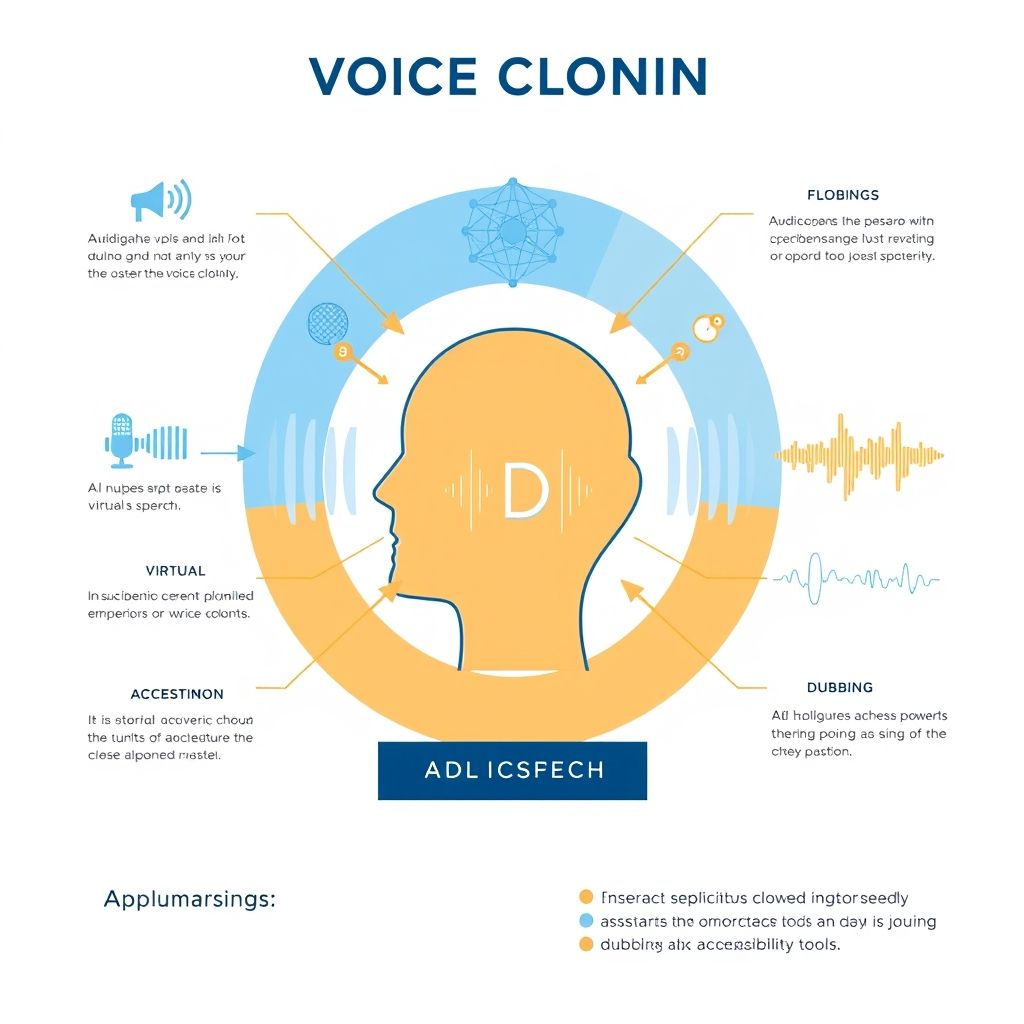
How Voice Cloning Bypasses Traditional Security
Traditional voice authentication systems analyze over 100 vocal characteristics, but modern AI clones can replicate these perfectly. A journalist demonstrated this vulnerability by accessing a bank account using only a cloned voice and publicly available personal information.
- Voice biometrics can’t distinguish perfect AI replicas
- Knowledge-based authentication uses easily obtainable data
- Multi-channel attacks combine cloned voices with other tactics
- Voice Cloning-as-a-Service lowers the barrier for criminals
Next-Generation Verification Methods
Leading institutions are adopting multi-layered defenses that combine:
- Biosignal detection (like ASU’s OriginStory microphone)
- Behavioral analysis during conversations
- Continuous risk scoring throughout interactions
- Cross-modal authentication with device/location data

The paradigm has shifted from asking “Does this voice match?” to “Is this a real human voice?” New systems analyze subtle artifacts in synthetic voices, including:
- Waveform inconsistencies
- Unnatural frequency patterns
- AI model interpolation signs
- Biological speech production markers
Real-World Implementation
Arizona State University’s OriginStory technology, which won the FTC’s AI Voice Cloning Challenge, uses specialized microphones to detect biological speech patterns that AI cannot replicate. As Professor Visar Berisha explains, “The presence of biosignals indicates that a distinctly human speech production mechanism generated the speech.”
Financial institutions are implementing similar technologies after incidents like the Hong Kong deepfake scam where employees transferred $35 million after video calls with cloned executives.
Q: How can I protect myself from voice cloning scams?
A: Implement multi-factor authentication, establish verbal code words with contacts, and be skeptical of urgent financial requests. For businesses, consider AI detection tools that analyze call patterns.
Q: What industries are most at risk?
A: Financial services, healthcare, and government sectors are primary targets, but any organization using voice authentication is vulnerable. The 2024 election cycle has also seen political disinformation using cloned voices.
Future Outlook
As voice cloning becomes more accessible through services like ElevenLabs, verification technology must evolve. The FTC warns that with elections in 77 countries this year representing half the world’s population, voice cloning poses significant threats to democratic processes.
Emerging solutions focus on:
- Blockchain-based voice verification
- Real-time liveness detection
- Embedded audio watermarks
- Continuous authentication systems
